Giant panda
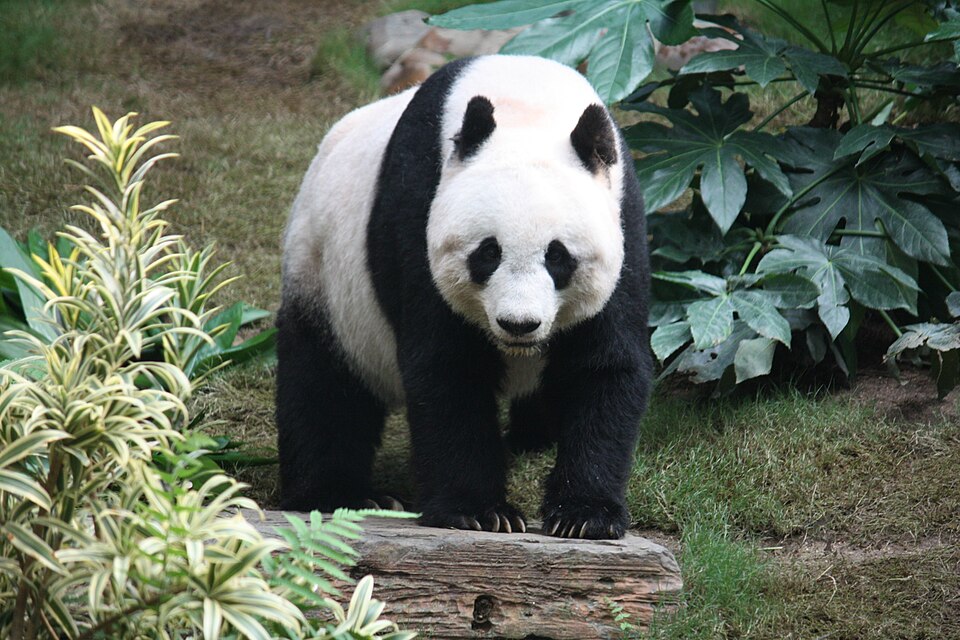
The Giant panda (Ailuropoda melanoleuca) is a herbivorous mammal native to Asia.
The giant panda, also known as the panda bear or simply panda, is a bear species endemic to China. It is characterised by its white coat with black patches around the eyes, ears, legs and shoulders. — Wikipedia
- Scientific name
- Ailuropoda melanoleuca
- Class
- Mammal
- Family / order
- Ursidae
- Diet
- Herbivore
- Habitat
- Terrestrial
- Found in
- Asia
- Weight
- 118 kg
- Length
- 1.3 m
- Lifespan
- 36.8 years
- Activity
- Diurnal
- Collective noun
- a embarrassment
- Conservation status
- Vulnerable
What does a Giant panda eat?
The giant panda is a herbivore, feeding on plants.
How big is a Giant panda?
The giant panda weighs around 118 kg and measures about 1.3 m.
How long do Giant pandas live?
In the wild, the giant panda can live up to about 36.8 years.
Where do Giant pandas live?
Giant pandas are found in Asia, in terrestrial habitats.
What is a group of Giant pandas called?
A group of Giant pandas is called a embarrassment.
Is the giant panda endangered?
The giant panda is currently listed as “Vulnerable” on the IUCN Red List.